Blog· August 24, 2026
How to Attach Carpet Runner to Stairs: 3 Methods that Guarantee Results
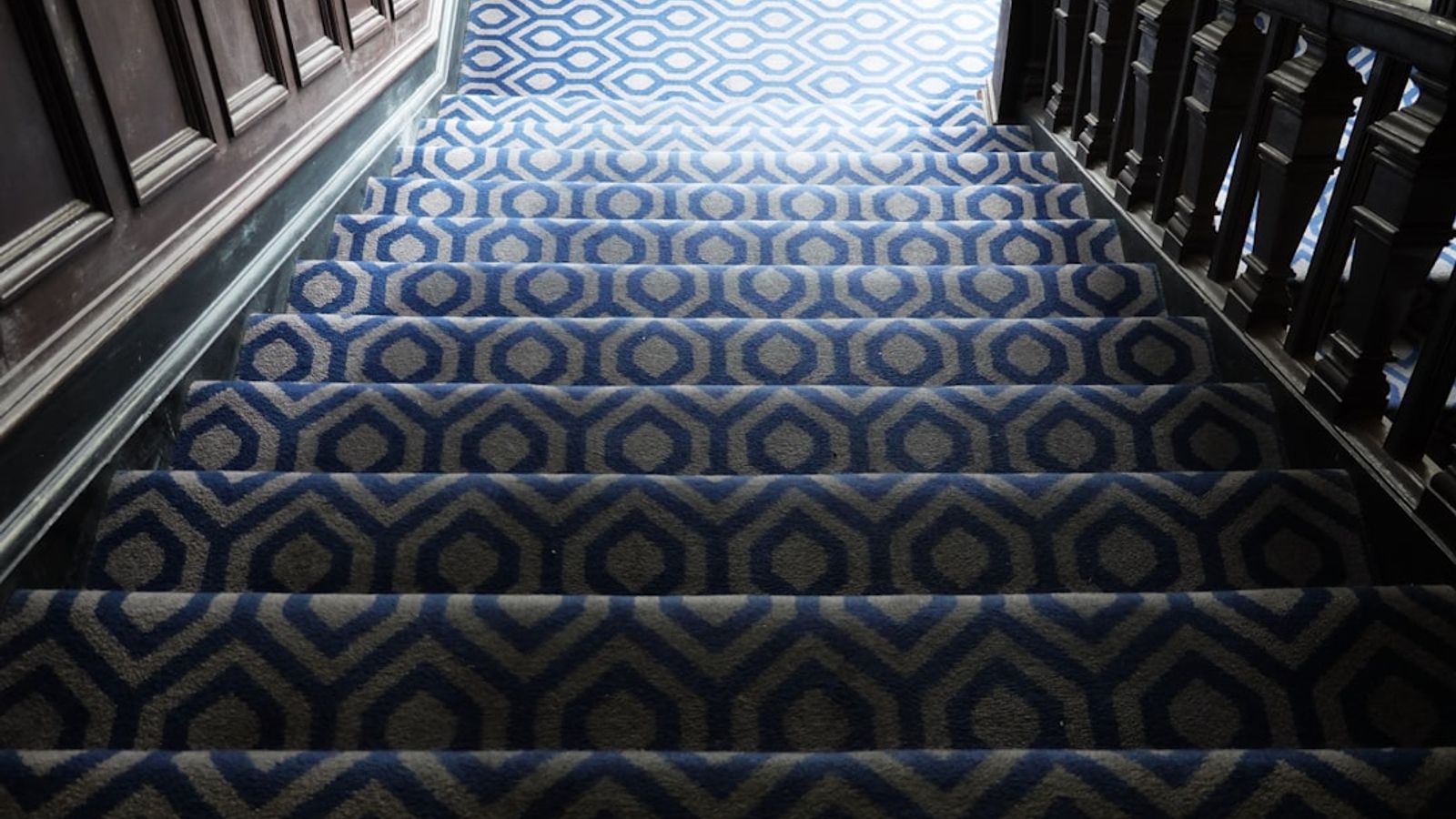
Attach a Carpet Runner Securely for Safer, Quieter Stairs
To learn how to attach carpet runner to stairs, start by centering the runner, adding a thin non-slip pad, and securing it with narrow-crown staples placed about every 3 inches in the tread-and-riser crease and under each stair nose. Double-sided carpet tape helps hold the pad and runner in position while you work; tack strips are another secure option for compatible jute- or action-backed carpet.
A runner can add traction on slick hardwood, soften footfall noise, and make daily trips up and down the stairs more comfortable. For a clean, long-lasting result, keep the pad narrower than the runner, pull the material taut at every step, and use a stair tool or bolster chisel to create a tight crease before stapling.
Whether you choose the tailored Hollywood wrapped method, the simpler waterfall method, or tack strips with a knee kicker, proper alignment and secure fastening matter more than decorative stair rods or surface tape alone.
I am Henry Rouhana, a residential general contractor and founder of Sure-Fix Remodeling in Easton, Pennsylvania, with more than 20 years of hands-on renovation experience. I have helped homeowners plan practical flooring and safety upgrades, including how to attach carpet runner to stairs in ways that support long-term comfort and durability.
Essential Tools, Materials, and Stair Measurements
Before you drive a single staple or unroll any fabric, setting yourself up with the right gear and accurate calculations makes all the difference. When planning projects that touch structural woodwork, precision is key. If you are coordinating this with a broader Flooring Installation throughout your hallways or living spaces, having clean transitions between surfaces starts with proper measurements right on the steps.
Measuring Stairs and Sizing Your Runner
Getting your carpet length right ensures you do not end up stranded three steps from the landing with an empty roll.
The Step Formula: Measure the depth of one tread (from the back riser, wrapping around the front nosing) and the height of one vertical riser. Add those two numbers together.
Total Run: Multiply that sum by the total number of steps. Always add at least a 10% buffer (or roughly 1 extra foot of length per flight) to account for waste, tension adjustments, and end-trim hems.
The 19-Inch Quick Rule: In trade practice, a reliable baseline is allowing 19 inches of runner material per standard stair step (counting the top landing transition as an extra half step). For example, a 13-step flight typically requires about 22 to 24 linear feet of runner.
For width, standard residential staircases measure around 36 inches wide. A 27-inch or 30-inch runner leaves a clean 3 to 4.5-inch border of exposed finished hardwood on either side, creating balanced visual symmetry. Mark the center of each tread and riser with a light pencil tick, or run low-tack painter's tape along the outer perimeter boundaries on the steps to keep your line true.
Preparing the Wooden Treads and Installing Underlayment
Never install a runner over bare, untreated dirt, debris, or protruding old fasteners. Inspect every wooden tread carefully:
- Pull out old staples, brads, or tack nails using pliers.
- Vacuum the corners and tread crevices thoroughly.
- Fix squeaky boards with countersunk trim screws before covering them up.
Carpet padding (underlayment) protects your hardwood from friction, softens foot impact, and significantly dampens acoustic echo. Cut individual pad pieces roughly 1 inch narrower on each side than the runner (2 inches narrower total). This ensures the pad remains completely hidden beneath the carpet edges when viewed from the side profile of open stringers.
Secure each pad piece with heavy-duty double-sided carpet tape on the tread surface. For wrapped installations, curve the front edge of the pad over the tread bullnose and anchor it underneath using a few staples or a hammer tacker.
Method
Best Carpet Types
Primary Fastener
Ideal Skill Level
Direct Staple-Only (Hollywood)
Felt-back, woven wool, synthetic pile
9/16" narrow-crown staples
Beginner to Intermediate
Waterfall Stapling
Thick pile, flatweaves, heavy synthetics
1/2" to 9/16" staples + tape
Beginner
Tack Strip & Knee Kicker
Action-back, woven jute-backed carpets
Angled tack strips + brads/staples
Intermediate to Advanced
How to Attach Carpet Runner to Stairs: 3 Core Installation Methods
Executing a clean, long-lasting installation comes down to matching your chosen method to your carpet's backing and the architectural style of your staircase. Following standard industry practices, such as the Lowe's guide on stair runner installation steps, ensures the runner remains firmly anchored without shifting under foot traffic.
How to Attach Carpet Runner to Stairs Using the Hollywood Wrapped Method
The Hollywood method—also called the upholstered or cap-and-band technique—is the gold standard for tailored, high-end staircases. In this approach, the carpet hugs every contour of the wood, wrapping tightly underneath the bullnose before running flat down the vertical riser.
Anchor the Top: Align the runner flush under the upper landing lip or top riser. Secure it with 9/16-inch narrow-crown staples spaced every 3 inches.
Work Downward: Pull the carpet flat over the first tread, ensuring even side reveals.
Pack the Crease: Use a heavy steel bolster chisel or stair tool to seat the carpet tightly into the 90-degree intersection (crotch) where the tread meets the riser.
Fasten the Joint: Fire staples directly into the crevice every 3 inches, working from the center outward to left and right. This pushes any air bubbles or ripples out toward the sides.
Wrap the Nose: Pull the carpet firmly over the front nosing of the tread, wrap it back underneath the lip, and drive staples horizontally directly into the underside of the bullnose. This extra anchoring point shortens unsupported spans and keeps the runner tight.
How to Attach Carpet Runner to Stairs Using the Waterfall Method
The waterfall method drops the carpet straight down from the edge of the stair nosing to the base of the next riser without fastening it underneath the bullnose lip. It provides a clean, vintage aesthetic that works particularly well with thick, heavy-gauge carpets or patterns that might distort if bent tightly under the nose.
- Fasten the top edge securely under the landing or top riser.
- Smooth the carpet over the tread and allow it to cascade straight down to the crease below.
- Use a bolster chisel to drive the carpet into the base corner where the riser meets the next tread.
- Staple across the base corner every 3 inches while maintaining uniform downward tension.
- Repeat the process step-by-step down the flight.
Because the waterfall method skips the underside nose stapling, it installs faster, though it relies heavily on solid tensioning at the base of every riser.
Attaching with Tack Strips and Knee Kickers
For heavy-duty woven or action-backed carpets, tack strips provide unmatched gripping power. However, never use tack strips on felt-backed carpets, as the sharp metal pins will tear right through the backing.
When coordinating comprehensive Flooring Services, using tackless strips on stairs creates commercial-grade tension:
- Cut tack strips 2 inches shorter than the runner width.
- Nail a strip to the back of each tread (roughly 1/2 inch away from the riser) with the pins angled toward the riser.
- Nail a second strip on the riser face (1/2 inch above the tread) with pins angled downward.
- Seat the carpet on the pins, use a knee kicker to stretch the carpet firmly into the corner, and use a stair tool to wedge the backing firmly between the strips.
- Reinforce key stress points beneath the nosing with narrow-crown staples.
Handling Complex Stair Layouts, Landings, and Transitions
Not all staircases are straightforward single flights. Historic homes throughout Pennsylvania and New Jersey often feature mid-flight landings, subtle shifts in alignment, or winders.
Splicing Multiple Runners Seamlessly
Standard retail runners often come in 8-foot or 10-foot lengths. If you are combining multiple stock runners instead of ordering a custom continuous roll, always hide your seams where they naturally blend into the architecture.
The best location to join two runners is in the 90-degree crease where the riser meets the tread, or directly tucked under a stair bullnose:
- Cut the first runner so it terminates squarely at the base of the riser or under the lip.
- Apply double-sided carpet tape across the joint.
- Overlap the new runner slightly, matching patterns carefully (such as herringbone or linear stripes).
- To prevent natural wool, jute, or woven synthetic fibers from fraying, apply a thin bead of hot glue or latex seam sealer along raw cut edges, smoothing it flat before stapling the joint every 2 inches across the seam.
Navigating 90-Degree Turns and Landings
When a staircase turns at an intermediate landing, you can turn the runner neatly using a 45-degree mitered fold or by installing a dedicated, professionally cut landing piece. Reviewing verified trade references like the Angi step-by-step carpet runner advice helps clarify how to keep pattern lines aligned during turns.
Bring the bottom flight runner up onto the landing surface.
Fold the runner back on itself at a precise 45-degree diagonal angle toward the direction of the upper flight.
Secure the underside of the fold with heavy-duty carpet seam tape.
Press the seam flat, verify that the outer edge remains parallel with your skirtboard margin, and staple cleanly around the perimeter.
If an older staircase has settle-drift (where steps are slightly out of level), avoid measuring exclusively from the edge of each individual tread, which can make stripes appear crooked. Instead, maintain a steady visual reference line from the continuous wall skirtboard, slipping a small, hidden wooden shim beneath the runner edge if necessary to true up the line.
Frequently Asked Questions About Stair Runner Installation
What size staples should be used to attach a stair runner?
The ideal fastener is a 9/16-inch narrow-crown staple fired from an electric or pneumatic staple gun. Narrow crowns slip cleanly between carpet fibers down to the backing without crushing the pile or leaving visible metal bars. For lightweight flatweaves or smaller DIY staplers, 1/2-inch heavy-duty T50 staples offer sufficient bite into solid wood subfloors.
Will installing a carpet runner ruin hardwood stairs?
Staples and tack nails will leave tiny pinholes in the wood, but these are minimal and easily filled with matching color-putty or concealed during future wood refinishing. More importantly, runners protect high-traffic tread centers from heavy daily wear, scuffs, and gouges. That natural UV sunlight will age exposed side margins over the years; if you ever replace your runner, simply choose one that is 1 to 2 inches wider to cover any previous sun-fade lines.
How do you keep a stair runner straight on uneven or old stairs?
Older stairs are rarely perfectly square. To prevent a runner from drifting crooked:
- Cut a spacer block out of scrap carpet padding to match your exact side reveal.
- Hold this spacer against the side stringer on every single step as you advance upward to ensure uniform margin spacing.
- If a tread tilts, use a thin hidden wood shim under the low side of the runner to level out the transition before driving your staples.
Conclusion
Adding a carpet runner transforms a bare, noisy staircase into a warm, comfortable, and skid-resistant focal point in your home. By taking accurate measurements, prepping your wood substrate, and choosing the right attachment method—whether it is the tailored Hollywood wrap, a simple waterfall drop, or heavy-duty tack strips—you can achieve a safe, secure installation that holds up for years.
If your home renovation involves older historic stairs, complex winding landings, or you are coordinating a broader residential interior remodel, professional installation ensures flawless pattern alignment and maximum longevity. Explore our complete guide to Carpet Runner Installation to see how Sure-Fix Remodeling delivers tailored craftsmanship across Eastern Pennsylvania and Western New Jersey.